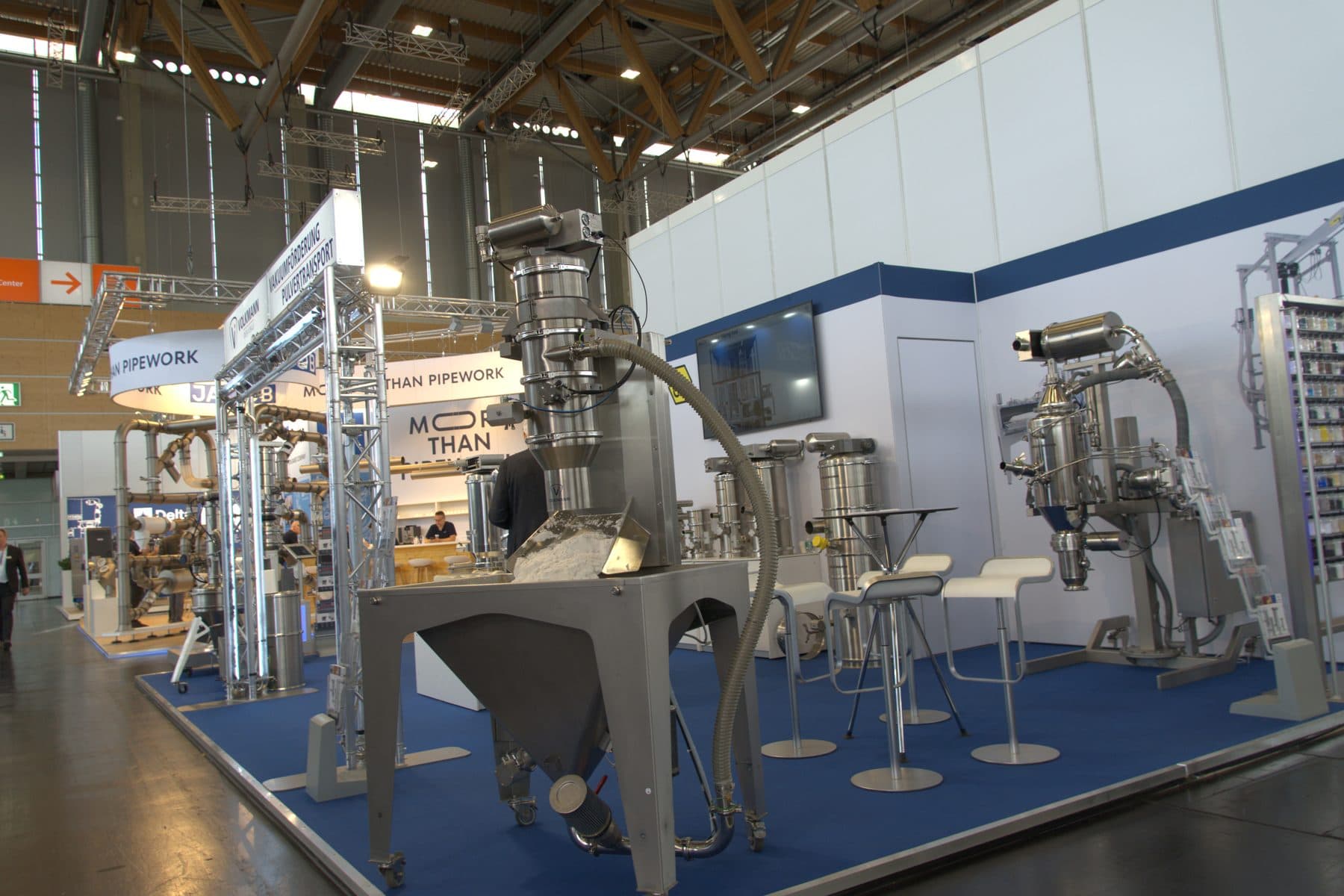
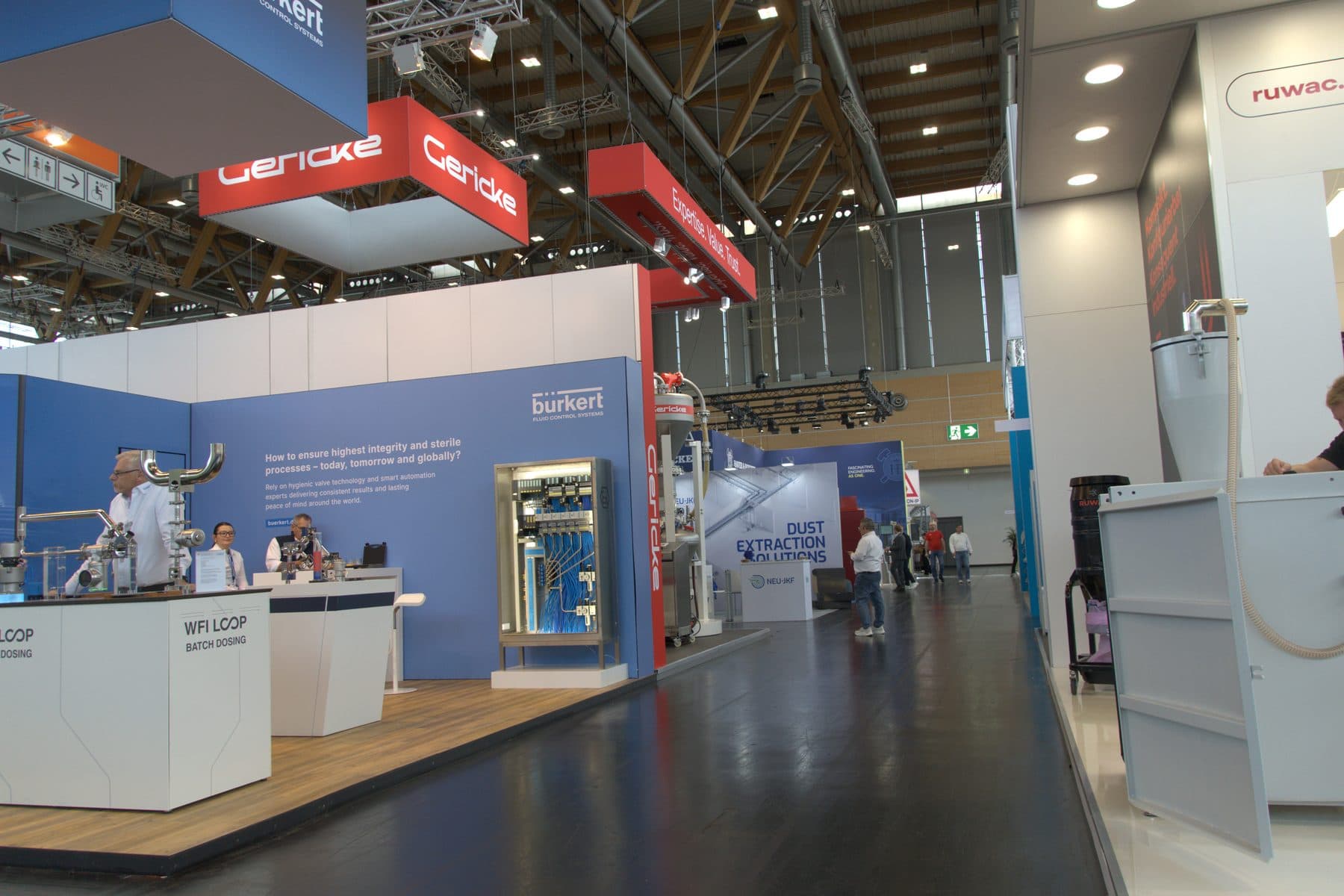
A mixer, a dryer, a pneumatic conveying line or a dust filter can look similar on paper. In operation, the differences show up quickly — in product quality, downtime, safety and energy costs. After visiting POWTECH TECHNOPHARM 2026 in Nuremberg, we summarised the seven points that make the biggest difference when specifying and sourcing powder and bulk-solids equipment.
This checklist is written for buyers, project engineers and plant managers. It is not a substitute for a site-specific risk assessment or for the advice of a notified body, but it helps you ask the right questions before you compare offers.
1. Characterise the material — and test with your real product
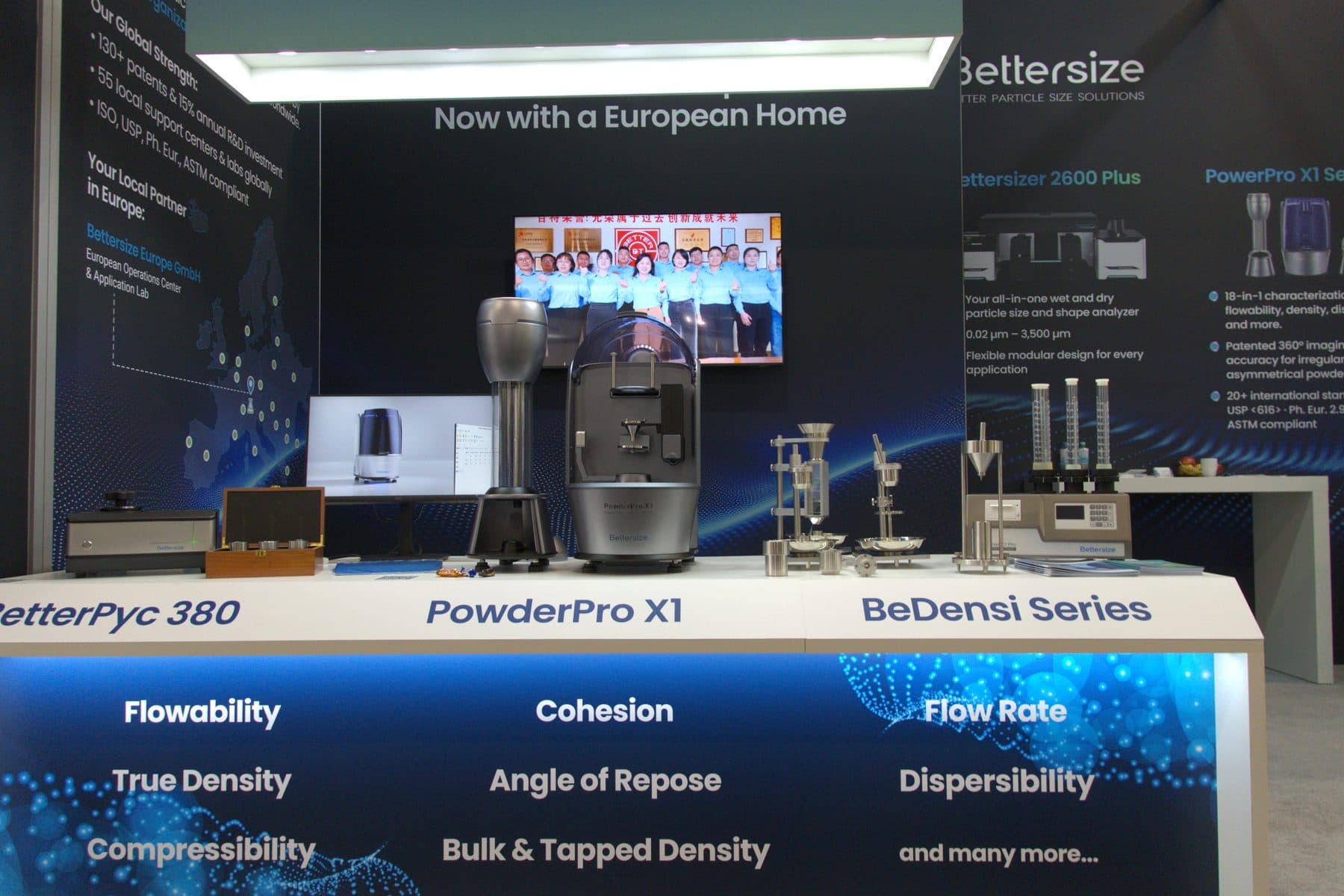
Powders and bulk solids behave very differently depending on particle size distribution, particle shape, moisture, temperature and how long they have been stored. The same machine can work perfectly for one product and fail with another.
What to specify:
- Particle size distribution and, where relevant, particle shape
- Bulk and tapped density, flowability and cohesion
- Moisture content, temperature and hygroscopic behaviour
- Abrasiveness, friability (sensitivity to breakage) and tendency to segregate
- Any changes over time: caking, agglomeration, electrostatic charging
What to ask suppliers: whether they can run trials with your product in their test centre, which parameters they will measure, and how the trial results translate into the guaranteed performance of the full-scale machine.
2. Assess the explosion risk and agree on the protection concept
Many organic, metallic and synthetic powders can form explosive dust–air mixtures. In the EU, two directives set the framework: Directive 2014/34/EU (ATEX) for equipment and protective systems intended for use in potentially explosive atmospheres, and Directive 1999/92/EC for the protection of workers, which requires the operator to classify hazardous areas into zones (for dust: zones 20, 21 and 22) and to document the measures taken.
What to specify:
- The dust explosion parameters of your actual product (for example Kst, pmax and minimum ignition energy) — not generic literature values
- The zone classification inside and around the equipment
- The protective measures expected: explosion-resistant design, venting, suppression, isolation
- Clear responsibilities: who designs, who supplies and who certifies which part of the concept
What to ask suppliers: which equipment category and marking their machine carries, which protective systems are included in the scope, and which documents (declarations of conformity, operating instructions, test certificates) will be delivered.
3. Plan for the EU Machinery Regulation (EU) 2023/1230
The new Machinery Regulation (EU) 2023/1230 replaces the Machinery Directive 2006/42/EC and applies from 20 January 2027. Machines placed on the market from that date must comply with the new regulation. Among other changes, it allows instructions to be provided in digital form (with a paper version available on request), strengthens requirements related to safety-relevant software and protection against corruption (cybersecurity), and addresses machines with self-evolving behaviour.
What to specify: for equipment that will be delivered or placed on the market around or after January 2027, state in the contract which legal basis applies to the CE marking and the declaration of conformity, and which documents must be delivered — and in which language.
What to ask suppliers: how they are preparing for the regulation, and whether the offered machine and its documentation will be compliant at the planned delivery date.
4. Define hygiene, cleanability and material documentation
For food, feed, chemical and especially pharmaceutical applications, cleanability is a design requirement, not an afterthought. Dead zones, rough surfaces and inaccessible seals lead to cross-contamination, cleaning downtime and validation problems.
What to specify:
- Product-contact materials (for example stainless steel grade 1.4404 / AISI 316L) and seal materials
- Surface finish requirements for product-contact surfaces (for example a maximum Ra value)
- The cleaning concept: dry cleaning, wet cleaning, cleaning-in-place (CIP) or washing-in-place (WIP)
- Material certificates, for example inspection certificates 3.1 according to EN 10204
- Where applicable: food-contact conformity (Regulation (EC) No 1935/2004), GMP requirements and support for qualification (DQ/IQ/OQ)
What to ask suppliers: which hygienic design guidelines they follow, how the machine is dismantled and inspected, and which documentation package is included in the price.
5. Ask for energy data at your operating point
Compressors, blowers, vacuum pumps, drives and dryers often cost more in energy over their service life than at purchase. Pneumatic conveying in particular is energy-intensive, and the choice between dense-phase and dilute-phase conveying also affects product degradation and pipe wear.
What to specify: the required capacity, conveying distance and operating hours, so that suppliers can calculate energy demand for your case.
What to ask suppliers:
- Energy consumption at your operating point, not at the best point of the performance curve
- Compressed-air or gas demand, including expected leakage
- Options for variable-speed drives, intelligent control and heat recovery
- Maintenance intervals and wear parts with their expected lifetime
Comparing offers on a total-cost-of-ownership basis — purchase price plus energy, maintenance and spare parts over a defined period — often changes the ranking.
6. Specify integration, measurement and data
New equipment has to fit into an existing plant: mechanically, electrically and digitally. Interfaces that are not specified early become expensive change orders later.
What to specify:
- Control-system interfaces and communication protocols (for example OPC UA or the fieldbus used on site)
- Weighing and dosing accuracy, recipe management and batch records
- Inline or at-line measurement (for example particle size, moisture or fill level) where it adds value
- Requirements for remote access, data security and user management
What to ask suppliers: which interfaces are standard and which are options, who is responsible for integration and commissioning, and how software updates are handled during the service life.
7. Verify the supplier — not only the machine
A good machine from a supplier that cannot support you in your region is a risk. Before awarding the order, check the supplier as carefully as the technology.
What to check:
- References with comparable products and capacities
- Factory acceptance test (FAT) and site acceptance test (SAT): scope, criteria and who attends
- Availability of spare parts and typical delivery times
- Service reach: technicians in your country, response times, remote support
- Documentation language and completeness
- Commercial terms: warranty scope, performance guarantees and how they are verified
Summary: seven key questions
- Material: has the equipment been sized with measured data and trials using our product?
- Explosion protection: are zones, protective measures and responsibilities clearly defined and documented?
- Machinery Regulation: which legal basis applies at delivery, and is the documentation compliant?
- Hygiene: are materials, surfaces, cleaning concept and certificates specified?
- Energy: what does the machine consume at our operating point over its life?
- Integration: are interfaces, measurement and data security specified?
- Supplier: can the supplier test, accept, deliver spare parts and service us locally?
Legal note
This article provides general information and does not constitute legal advice or a substitute for a site-specific risk assessment. Legal references: Directive 2014/34/EU; Directive 1999/92/EC; Regulation (EU) 2023/1230; Regulation (EC) No 1935/2004; EN 10204. Please check the current versions of the applicable legislation and standards for your project.
Planning a powder or bulk-solids project?
EGTarya helps define the technical requirements, identify and evaluate suitable suppliers in Germany and internationally, and compare offers on a like-for-like basis.
Contact EGTarya